
Florida has more sailing schools than any other state in the US, and it is not particularly close. The combination of year-round warm weather, hundreds of miles of protected coastline, and easy access to open water makes it the obvious place to learn. Whether you want to sail the turquoise shallows of the Keys, cross Biscayne Bay under the Miami skyline, or tack through the calm waters of Tampa Bay, there is a school and a setting to match.
This guide breaks down Florida's main sailing regions, the conditions you will find in each, and schools worth looking at. If you want to jump straight to browsing, our directory of sailing schools in Florida has the full list with reviews, courses, and contact details.
Why Florida for Learning to Sail
There are a few things that set Florida apart from other US sailing destinations.
Year-round season. Unlike the Northeast or Pacific Northwest, Florida's sailing season never really stops. Water temperatures stay above 70°F for most of the year, and even in January you can train comfortably in a light jacket. This means you are not locked into a narrow summer window to schedule a course.
Protected waters everywhere. Florida's geography creates natural classrooms. The Intracoastal Waterway runs most of the state's length. Biscayne Bay, Tampa Bay, and the Florida Keys backcountry all offer sheltered conditions for building confidence before heading offshore. Most courses start in calm, protected areas and work outward as students improve.
ASA territory. In the US, the American Sailing Association (ASA) is the dominant certification system, and Florida is the heartland of ASA training. Nearly every school in the state offers ASA courses, from the introductory ASA 101 Basic Keelboat through to ASA 114 Cruising Catamaran. If you plan to charter in the US or Caribbean, ASA credentials are widely recognized and accepted.
Variety of conditions. Florida gives you options that few other states can match. Flat-water bays for first-timers, Gulf Stream crossings for blue-water experience, island hopping in the Keys for navigation practice, and open Gulf of Mexico sailing for offshore miles. You can build an entire sailing education without leaving the state.
The Florida Keys: Island Sailing at Its Best
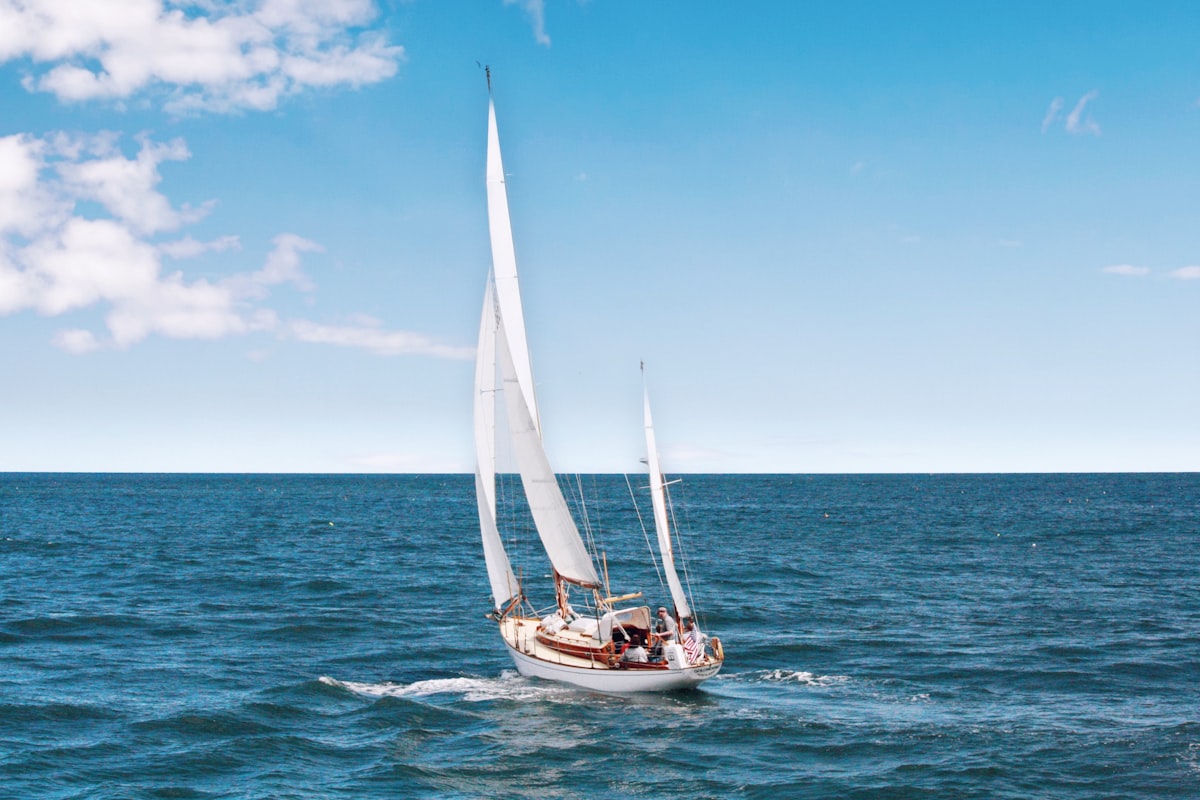
The Keys stretch 120 miles from Key Largo to Key West, connected by the Overseas Highway and surrounded by some of the clearest water in the continental US. For sailors, this chain of islands creates a unique environment: shallow reef-protected waters on the Atlantic side and expansive flats on the Gulf side, with dozens of anchorages and cuts between them.
Conditions in the Keys are generally forgiving. The reef system dampens ocean swell, trade winds provide consistent 10 to 15 knot breeze most of the year, and distances between stops are short. For beginners, this means realistic sailing without intimidating sea states. For more advanced students, the Keys offer serious navigation challenges including reef awareness, tidal current management, and passages through narrow channels.
Key West is the epicenter of Keys sailing culture. Schools here benefit from the harbor's active sailing community and easy access to both Atlantic and Gulf waters. Southern Most Sailing School operates here with ASA courses, and Florida Yachts & Charters Key West offers both instruction and bareboat charters for graduates who want to practice independently.
Further up the chain, Key Largo sits at the gateway to the Keys and offers proximity to John Pennekamp Coral Reef State Park. American Sailing Academy in Key Largo runs ASA programs from this area, and the reef-side sailing grounds are hard to beat for scenic training days.
The Keys also stand out as a top destination for catamaran training. The shallow waters and steady winds are ideal for multihull instruction, and Catamaran Guru Sailing Academy has built a reputation as one of the best catamaran-focused schools in the country. If you are specifically interested in learning to sail catamarans, the Keys are where you want to be.
Southeast Florida: Miami, Fort Lauderdale, and Biscayne Bay
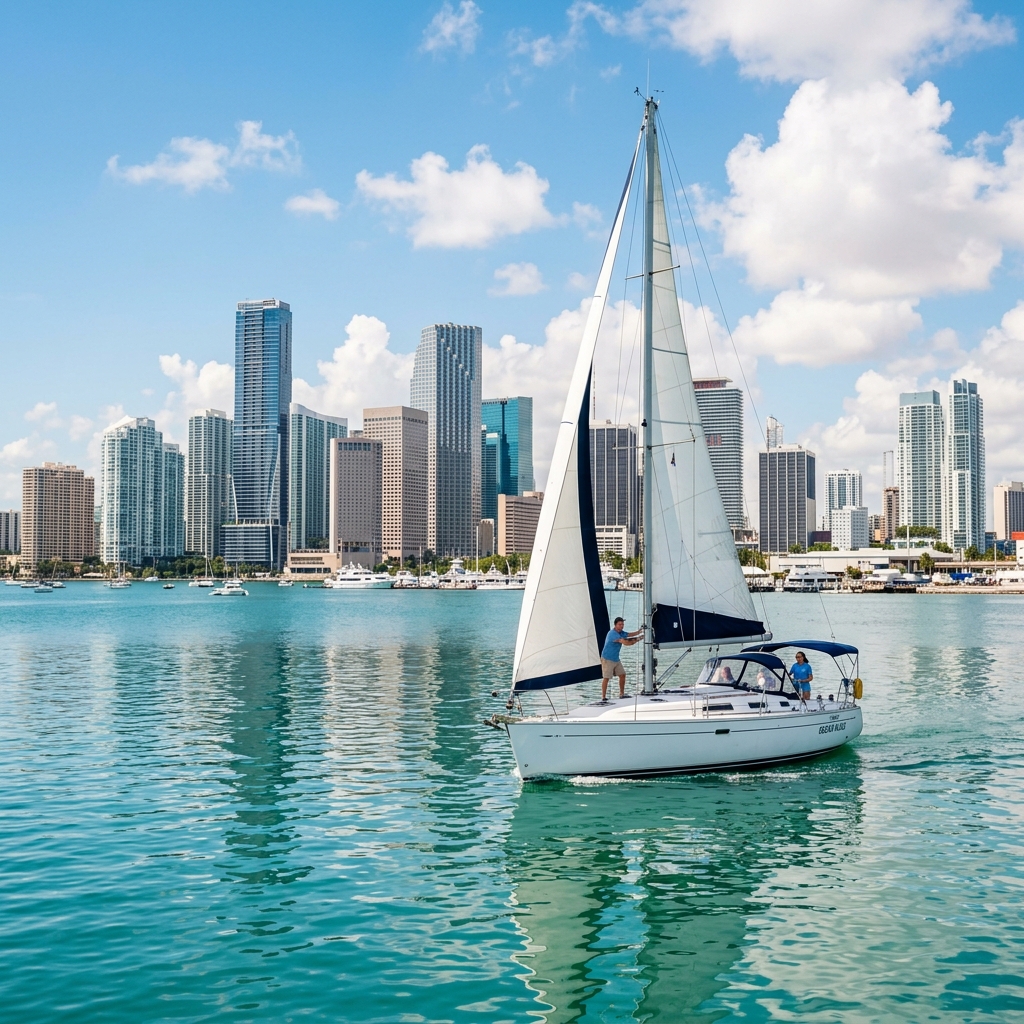
Southeast Florida offers a completely different sailing character. Biscayne Bay is one of the largest natural harbors on the East Coast, with miles of flat water protected by barrier islands. Yet just outside the bay, you have direct access to the Atlantic Ocean and the Gulf Stream, one of the strongest ocean currents in the world. This proximity means students can train in sheltered conditions and then step up to open-ocean sailing within the same course.
Miami's Coconut Grove neighborhood has been a sailing hub for decades. The area's marinas host a dense concentration of schools, charter companies, and yacht clubs. Coconut Grove Sailing School operates out of this historic sailing district and offers ASA courses from beginner through advanced levels. The bay's consistent afternoon sea breezes and relatively predictable conditions make it a solid learning environment.
Fort Lauderdale, known as the yachting capital of the world, brings a different flavor. The New River and Port Everglades provide sheltered starting points, and the proximity to the Bahamas makes it a natural launching pad for students interested in offshore passages. Blue Water Sailing School is based in the Fort Lauderdale area and offers courses that take advantage of this offshore access, including blue-water passage preparation.
For students visiting from abroad or from other US states, Southeast Florida has the advantage of major international airports and extensive hospitality infrastructure. You can fly in, take a week-long course, and combine it with everything else Miami and Fort Lauderdale have to offer.
Tampa Bay and the Southwest Coast
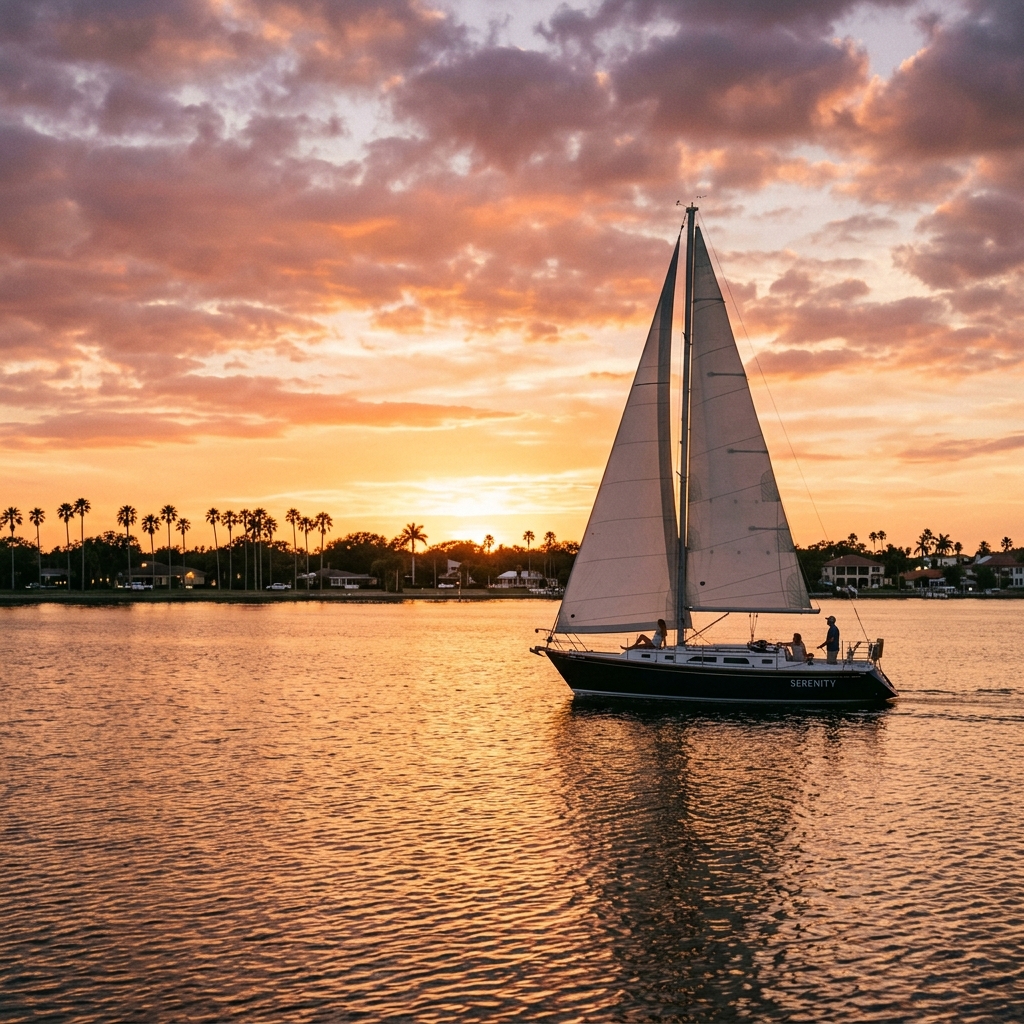
Tampa Bay is one of the largest natural harbors in the Gulf of Mexico and arguably the most beginner-friendly sailing destination in Florida. The bay's size creates enough room for meaningful sailing, but the surrounding landmasses keep conditions manageable. Afternoon sea breezes are reliable from spring through fall, typically building to 10 to 15 knots, which is ideal for learning.
The Gulf side of Florida generally has calmer seas than the Atlantic coast. The continental shelf extends far offshore, which reduces wave height. For nervous beginners, this matters. You get real sailing experience without the kind of chop that can make early lessons uncomfortable.
Gulf Coast Sailing & Cruising School operates in this region and offers a range of ASA courses. The school takes advantage of Tampa Bay's varied geography, from the open bay to the mangrove-lined channels and barrier islands of the coast.
Further south, the Fort Myers and Naples area provides access to Pine Island Sound and the sheltered waters behind Sanibel and Captiva islands. Florida Sailing & Cruising School offers courses along this stretch of coast, where the sailing is distinctly cruising-oriented: quiet anchorages, wildlife-rich waters, and a slower pace that suits students who want to learn without the bustle of a major city.
The Panhandle and Northeast Florida
Florida's Panhandle and northeast coast are often overlooked as sailing destinations, but they offer some genuinely appealing options for students who want to avoid the crowds further south.
Pensacola sits on a deep natural harbor connected to the Gulf of Mexico by a narrow pass. The bay is well protected and the sailing conditions are excellent, with warm Gulf waters and steady thermal breezes. Pensacola Sailing Academy runs courses here, offering a quieter alternative to the busier South Florida schools. The cost of living and accommodation in the Panhandle is also noticeably lower, which can make a meaningful difference when budgeting for a multi-day course.
On the Atlantic side, St. Augustine combines America's oldest city with a surprisingly good sailing environment. The Matanzas River and the Intracoastal Waterway provide sheltered training grounds, while the inlet gives access to the open Atlantic. St. Augustine Sailing operates from this area, offering a setting that blends history, natural beauty, and solid wind conditions. It is a particularly good option for students driving down from the southeastern US who may not want to make the full trip to South Florida.
Choosing a Certification in Florida
Almost every sailing school in Florida teaches the ASA curriculum. This is worth understanding if you are comparing Florida to international destinations where RYA (Royal Yachting Association) or IYT (International Yacht Training) certifications are more common.
The ASA ladder starts with ASA 101 (Basic Keelboat), which covers the fundamentals of sailing a small to mid-size boat in light to moderate conditions. From there, ASA 103 (Basic Coastal Cruising) and ASA 104 (Bareboat Cruising) build toward independent chartering. Many Florida schools offer combo courses that bundle ASA 101 and 103 into a single week, which is a popular choice for students with limited time.
If you plan to charter primarily in the US, Caribbean, or with American charter companies, ASA is the standard credential. If your long-term goal is Mediterranean or European sailing, you may want to consider RYA certification instead, though that is harder to find in Florida. For most students starting out in Florida, ASA is the practical choice.
Best Time to Learn to Sail in Florida
Florida's sailing calendar breaks down roughly like this:
- October through April is the peak sailing season. Temperatures are comfortable (70s–80s°F), humidity drops, and the risk of tropical weather is minimal. Wind is generally steady from the north and east. This is when most schools run their busiest schedules and when conditions are most consistently pleasant.
- May through June offers a sweet spot: warm weather, lighter crowds, and afternoon thunderstorms that are usually brief and predictable. Many schools consider this their shoulder season, and you may find better availability or pricing.
- July through September is hurricane season. Training still happens, and many days are perfectly fine, but there is an elevated risk of disruption from tropical weather. Afternoons are hot and humid, with almost daily thunderstorms. If you are flexible on timing, this period is best avoided for course scheduling unless you specifically want summer availability.
One of Florida's biggest advantages over most other US sailing destinations is that the winter months — when sailing in New England, the Great Lakes, and the Pacific Northwest shuts down entirely — are actually Florida's best sailing months. If you are based in the northern US and want to escape winter while learning a new skill, the timing works out perfectly.
Finding the Right Sailing School
With over 20 sailing schools spread across the state, the right choice depends on where you want to sail, what certification you are after, and what kind of experience you are looking for. A catamaran course in the Keys feels very different from a monohull course on Tampa Bay, and both are different from an offshore prep course out of Fort Lauderdale.
You can browse all of them, filter by location, certification type, and read reviews from past students on our Florida sailing schools directory. Each school profile includes course listings, contact details, and location information to help you compare options side by side.
If you are still exploring and not set on Florida, our full sailing schools directory covers schools worldwide, including other popular US destinations like the Chesapeake Bay, San Francisco, and the Pacific Northwest.